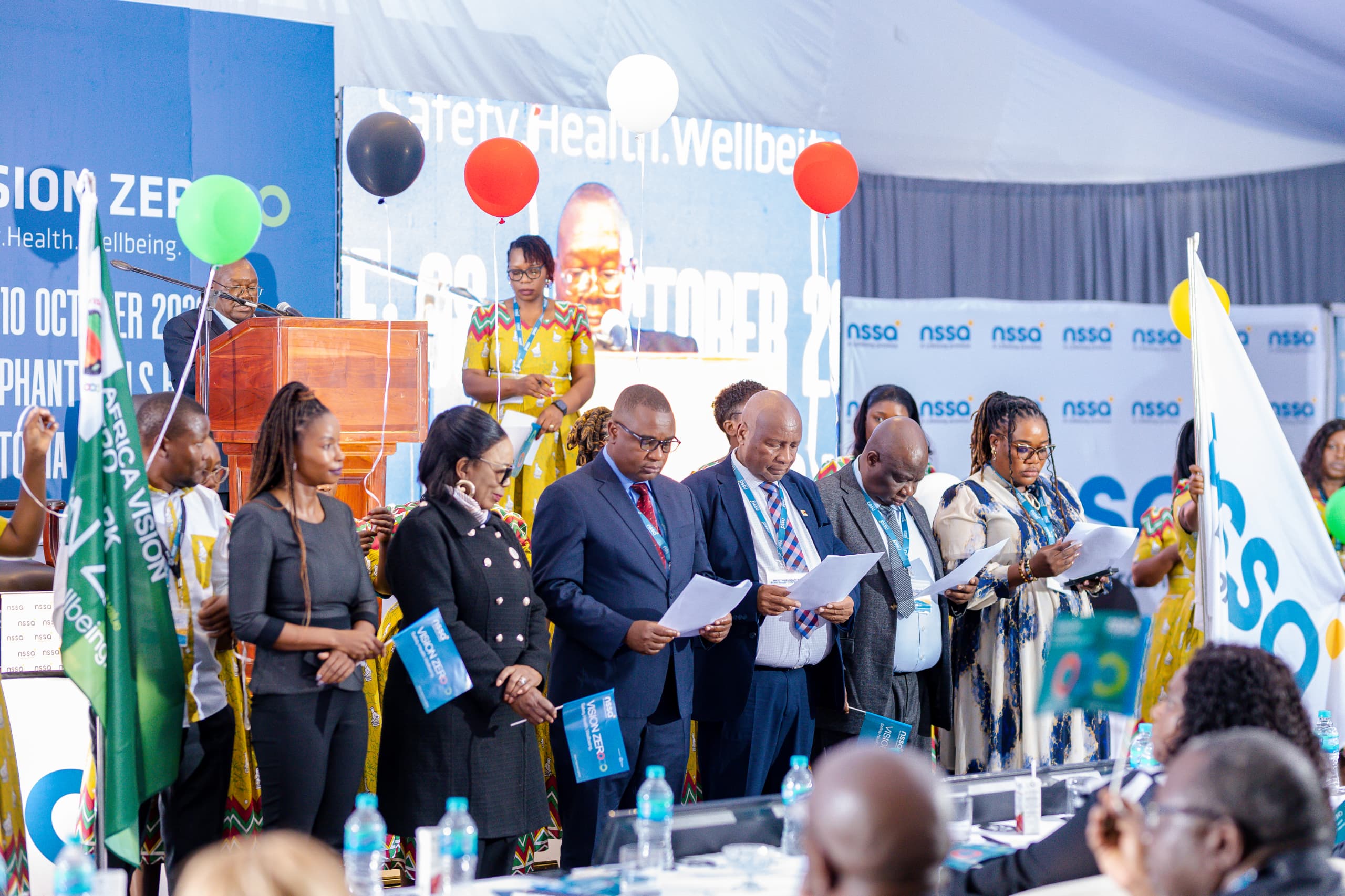
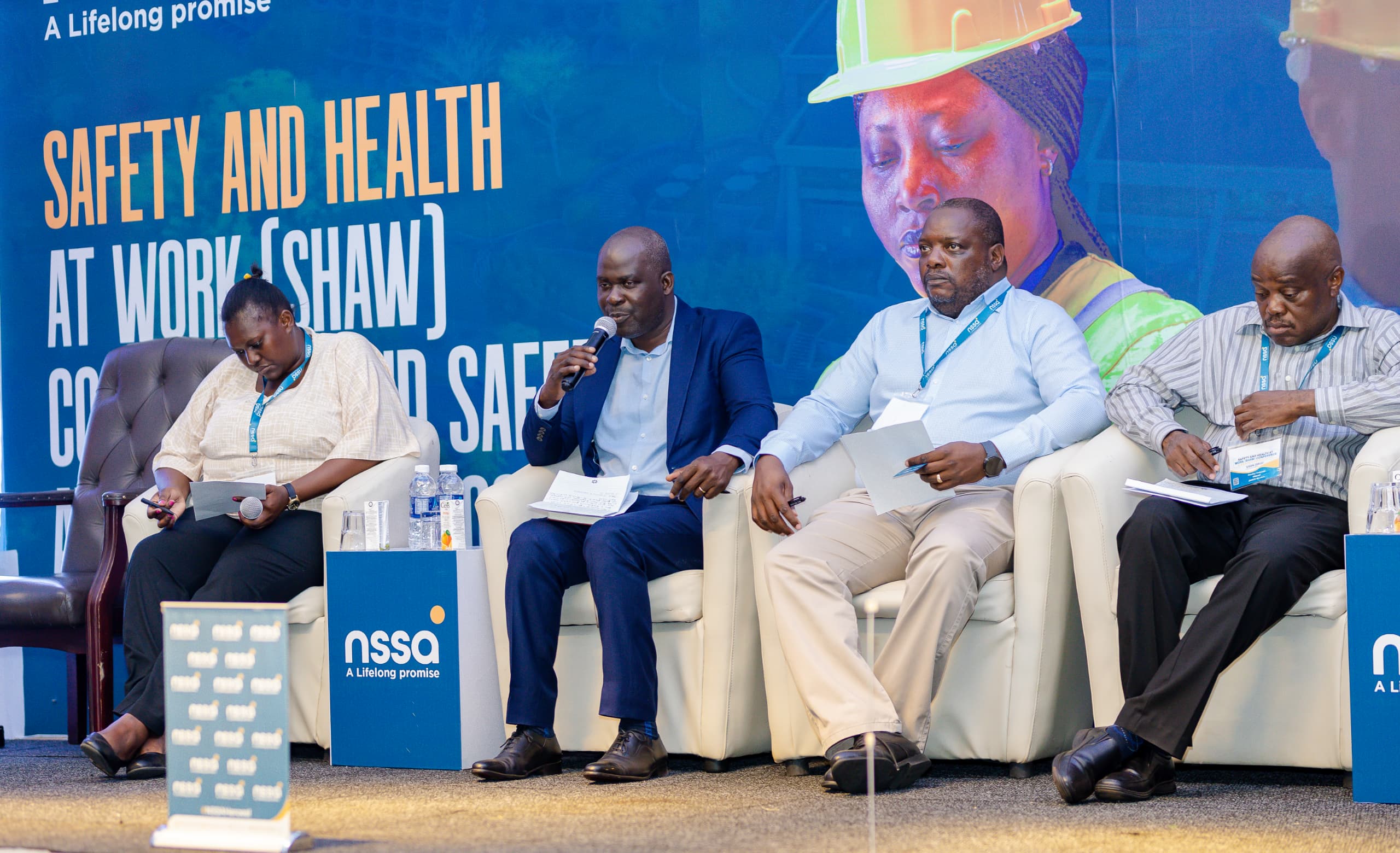
The opening day of the SHAW Conference on 8 October 2026 was marked by powerful calls for stronger workplace safety leadership, collective responsibility and a renewed commitment to preventing occupational accidents and ill health. The highlight was the colourful and energetic relaunch of Vision Zero, a movement championing the belief that workplace accidents and work-related ill health can be prevented.
The conference was opened by various speakers, culminating in the official opening and keynote address by the Honourable Minister of Public Service, Labour and Social Welfare, Mr Edgar Moyo, who reinforced the importance of collective action in building safer and healthier workplaces.
From compliance to commitment
Early morning discussions centred on the 7 Golden Rules of Vision Zero: leadership commitment, hazard and risk identification, setting safety and health targets, establishing safe systems, adopting safe and healthy technology, improving qualifications, and investing in people.
Presentations also explored neuro-leadership and how it transforms workplaces, the integration of Environmental, Social and Governance (ESG) and Safety, Health, Environment, Quality (SHEQ) performance, and the role of leadership in driving occupational safety and health (OSH). A key insight emerged: even the strongest safety systems can fall short when workers are not mentally prepared, adequately equipped or actively engaged in maintaining a safe working environment.
The President of the Africa Vision Zero Network, Dr Elizabeth Lungu, delivered a compelling message that resonated throughout the conference: behind every workplace accident statistic is a human story of loss, grief and lives forever changed. The pain experienced by a mother who loses a child or a child who loses a parent is a sobering reminder that workplace safety must go beyond numbers and compliance.
Dr Lungu emphasised that Vision Zero is not merely a programme or slogan, but a movement that requires sustained commitment and action. She challenged the perception that safety and productivity are competing priorities, stressing that safe and healthy workplaces are fundamental to sustainable organisational performance.
Everyone has a role to play
The conference underscored that workplace safety is a shared responsibility. Government must provide leadership and an effective regulatory framework; employers must invest in resources, training and safe working conditions; workers must actively identify hazards and follow safety procedures; and OSH professionals and training institutions must strengthen workplace competence.
Psychological safety also emerged as a critical priority, with workers needing to feel confident to report unsafe practices without fear of being labelled as complainers or facing negative consequences.
Delegates were challenged to translate the Vision Zero philosophy into five practical commitments:
• Make safety a leadership priority.
• Strengthen worker participation.
• Invest in competence.
• Embrace innovation.
• Build partnerships.
A launch that must inspire action
The relaunch of Vision Zero was marked by the raising of five flags representing NSSA, Vision Zero, the Africa Vision Zero Network, the International Social Security Association (ISSA) and Zimbabwe. Delegates celebrated through song and dance to the Vision Zero anthem composed by Dr Shingi Mugaviri and Edgar Sungai. The tripartite partners subsequently signed a commitment pledge, reaffirming their dedication to advancing workplace safety and health.
As the celebrations concluded, one question remained for every delegate, employer, employee and safety practitioner:
Now that Vision Zero has been relaunched, what will you do to ensure it becomes a living movement in our workplaces rather than another philosophy that is forgotten soon after its launch?
The real success of Vision Zero will not be measured by the launch itself, but by the lives protected, accidents prevented and safety culture strengthened through consistent action.